Everyone who knows me knows I’m a huge fan of the Myst series of games. Recently, I listened to two great streams where the designers Rand & Robyn Miller reflected on their past projects, and they told a few user-centered design anecdotes that felt too good to not share.
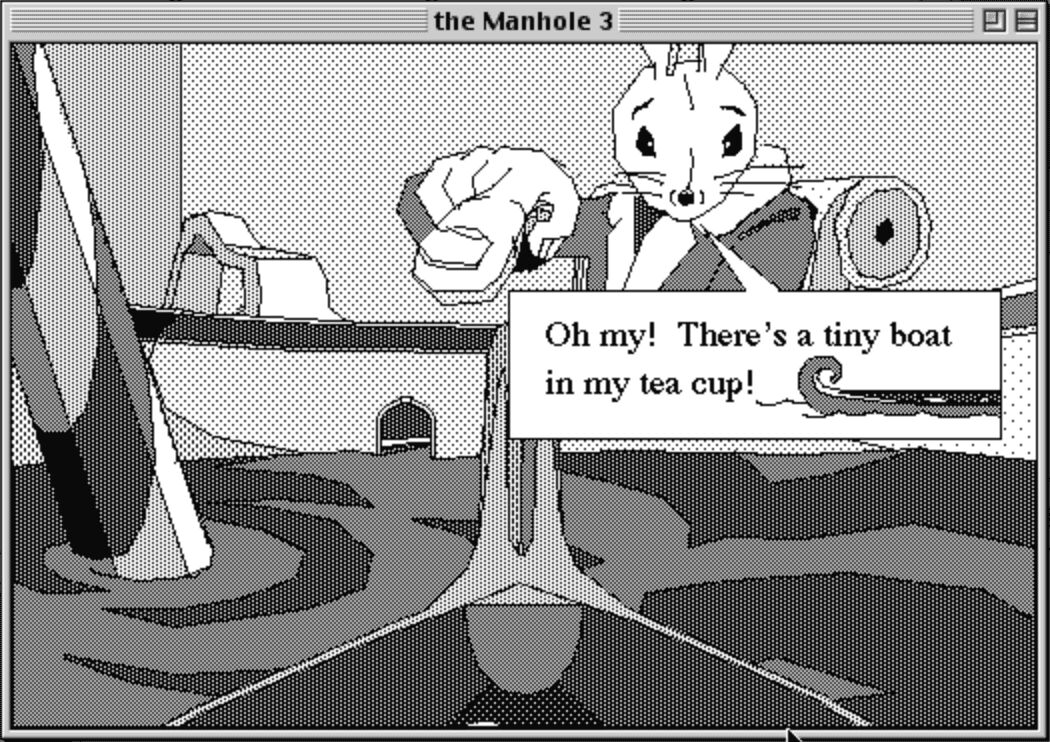
Before the massive success of Myst, Rand & Robyn Miller weren’t making moody headscratchers, they were making playful software for children. Their first project was “The Manhole,” an “interactive storybook for kids” (drawn & programmed entirely in Hypercard). Young players roam through an eclectic and fantastical world, encountering scenes like an office in an underwater shipwreck and rivers inside a teacup. In each area, clicking on different objects could trigger reactions ranging from draining a swimming pool to stepping inside a painting.
When testing the game, the Millers would both observe a player on one computer and have Hypercard editor open on another. Any time a kid tried to interact with a part of the world that didn’t actually do anything (like clicking on a torch that was just part of the scenery), the Millers immediately added a hotspot on top of the object. Later, they’d go back in and add some interactivity for when players clicked there in the future.
What an amazingly short loop for user-driven design! Using human behavior as a compass, they could go almost immediately from seeing an opportunity to fulfilling it.
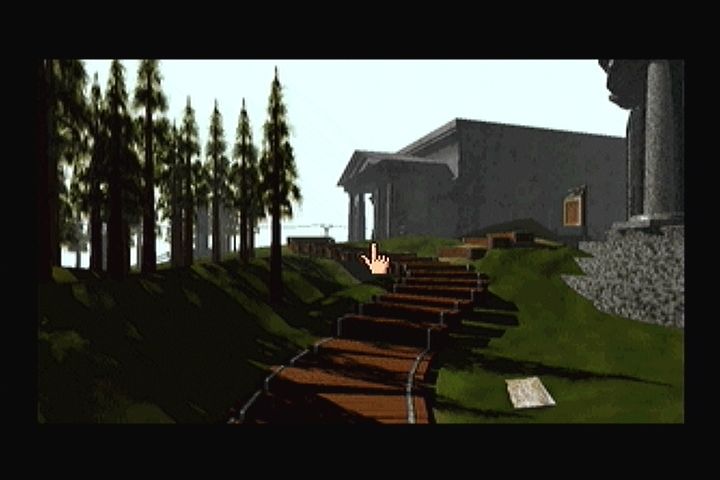
The second story that captured my attention was about “Myst,” which became infamous for dropping players into its puzzling world with little instruction, left to wander about with just wits as a guide. But early playtesters who dove into the game with zero guidance whatsoever were left unequipped to even get started with an exploration (Rand says “They were just completely lost”). Seeing they’d need to give players an ounce of direction to get them going, a written note was added at the beginning of the game that gave players an early goal to get off the starting blocks.
The thing that struck me most was Rand Miller’s reflection on the story:
“As much as I like to think we were Master Designers, it’s actually like, no – we messed up lots of stuff.”
I couldn’t disagree more. The mark of a “Master Designer” isn’t that they’re so smart that they get everything right on the first try. It’s actually that they’re experts in being curious, and seeing the real answers by learning from others. It’s not the fact that there wasn’t a note in the game before that matters – it’s that they were able to figure out it was needed.